
Encampment concerns

Learn about encampment risks, response and closures.
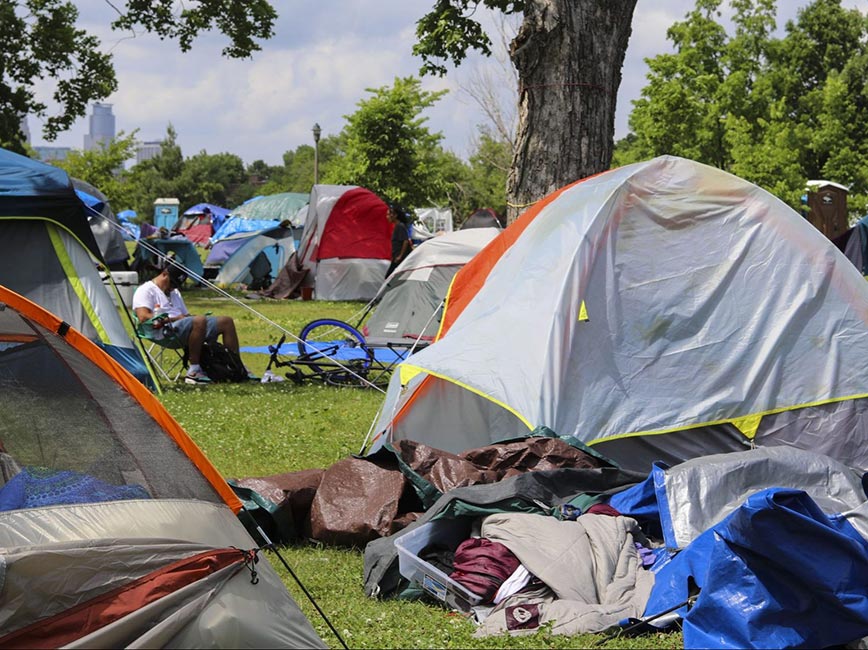
Tents set up in Powerhorn Park.


Overview

We believe everyone deserves dignified, safe and healthy housing. In contrast, encampments are a serious public health and safety risk.

We share about:

Health and safety risks at encampments

Encampments can create health and safety risks for those living there, as well as the neighboring communities. Health and safety concerns include:

  • Open drug use
  • Trash and odors
  • Infestation
  • Violent crime
  • Defecation in public spaces

Supporting unsheltered neighbors

  • Approach people with empathy and respect.
  • Contact 311 and ask for a Homeless Response Team visit if someone needs support.
  • If it feels safe to do so, voice your concerns respectfully and calmly.
  • Focus on how specific situations affect the safety and wellbeing of the community.

Supporting unsheltered individuals

We share data about supporting unsheltered residents and encampments across the city.

Information for property owners

Ways to prevent an encampment from forming

If your property is vacant:

  • Put in fencing
  • Hire private security
  • Get no trespassing signs from your neighborhood Crime Prevention Specialist
  • Visit it regularly and keep it in good shape
  • Ask neighbors to contact you if they notice unusual activities

Responding to an encampment on your property

Be proactive. It's easier to address an encampment when it's smaller.

  • Contact the Homeless Response Team through 311.
  • Report criminal activity to 911.
  • Safely get rid of any needles and sharps.

Private property owners are responsible for caring and maintaining their property, such as:

  • Making sure it's not open to trespass
  • Removing any garbage from an encampment
  • Lawn mowing
  • Weed removal
  • Ensuring fencing is in tact and structurally sound

See resources for property owners

About encampment closures supported by the City

To protect and care for residents, the City does not allow encampments as housing. We look at four factors to decide whether to close an encampment.

Safety impact Neighborhood impact Health impact External impact

Unstable structures

Geographic size

Hygiene issues

Stories from neighbors and business owners

Weather

Number of residents

Environmental issues

Nearby development, demolition or renovation

Drug use

Number of 911 and 311 calls

If those who are pregnant or younger than 18 years old live there  

Violence

How close an encampment is to schools, businesses and residents    
Propane tanks      
Illegal activity      


What happens before, during, and after a closure

Before

The City:

  • Reviews data and impacts to community.
  • Identifies available shelter resources.
  • Engages those on site, offering services, resources, transportation to shelter, and more.
  • Engages community partners and service providers to help with outreach.
  • Notifies people at an encampment at least 72 hours before the closure, so they can arrange for shelter and gather personal belongings. Sometimes, pressing safety or legal issues prevent us from giving this much notice.

During

Together, multiple City departments:

  • Work to ensure the safety of everyone involved.
  • Clean up debris, needles and garbage.
  • Direct traffic away from the site.

The Homeless Response Team or contracted community partners support people on-site or remotely.

After

We notify relevant:

  • City departments.
  • Hennepin County departments.
  • Contracted community partners and unsheltered homelessness service providers.

The Homeless Response Team continues outreach to provide services to residents experiencing unsheltered homelessness.

Contact us

Minneapolis 311

Phone

311 or 612-673-3000

Relay service

612-673-3000

Hours

7 a.m. – 7 p.m.
Monday – Friday

See list of City holidays