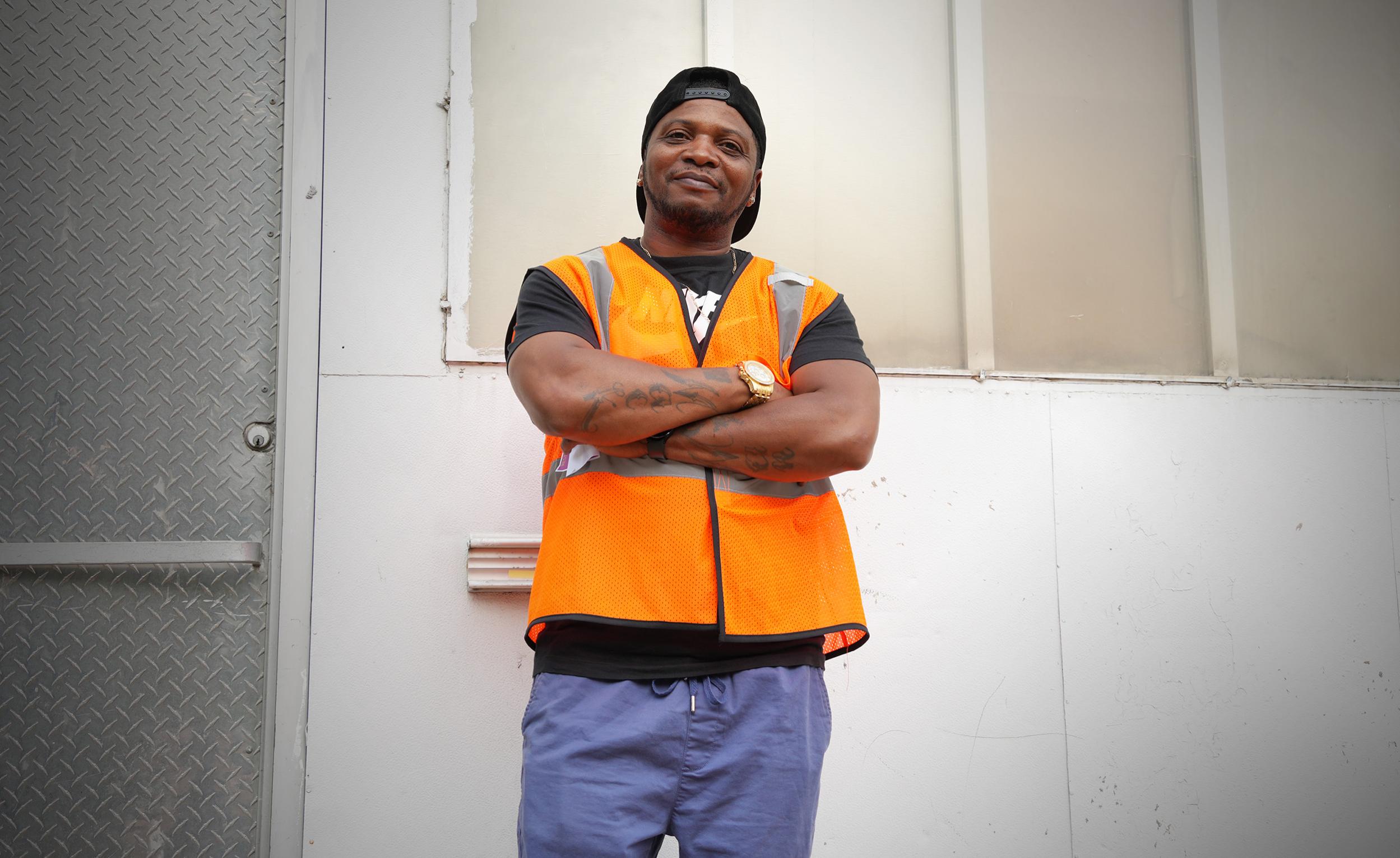
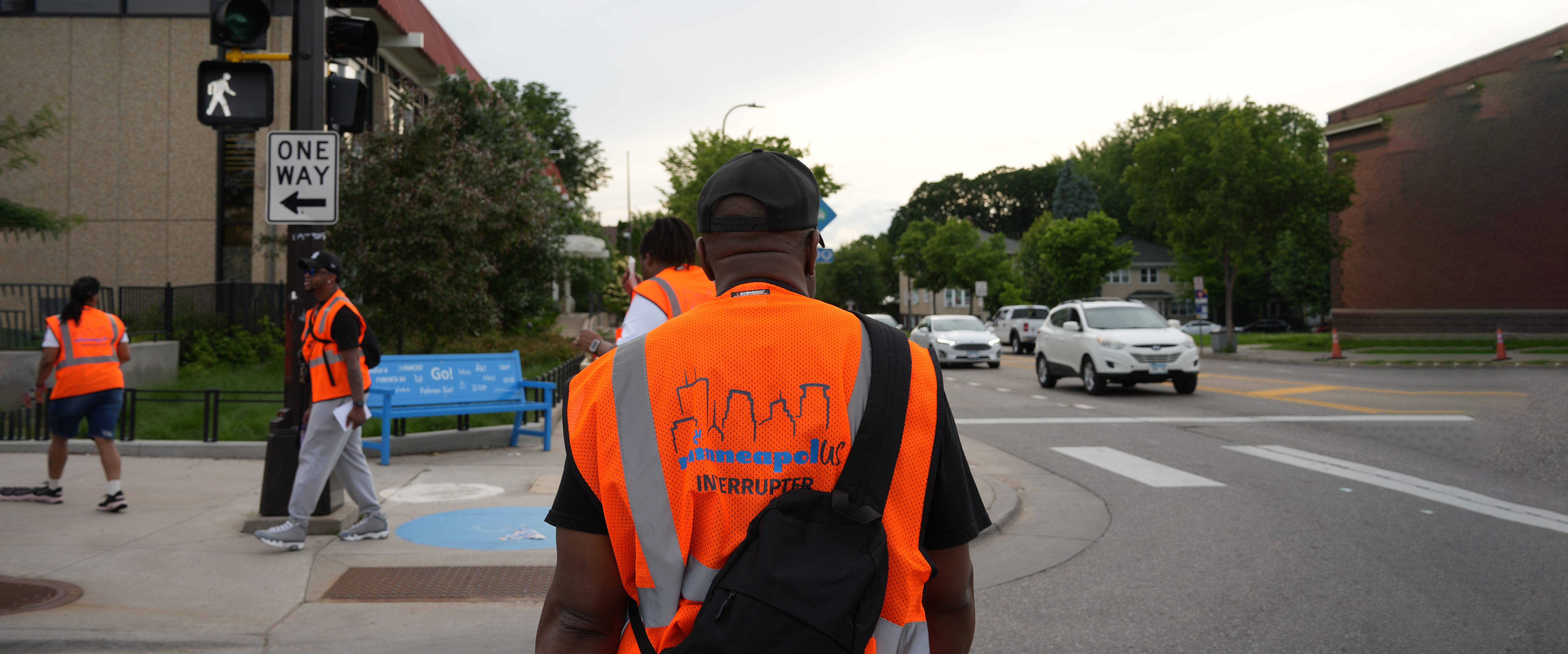
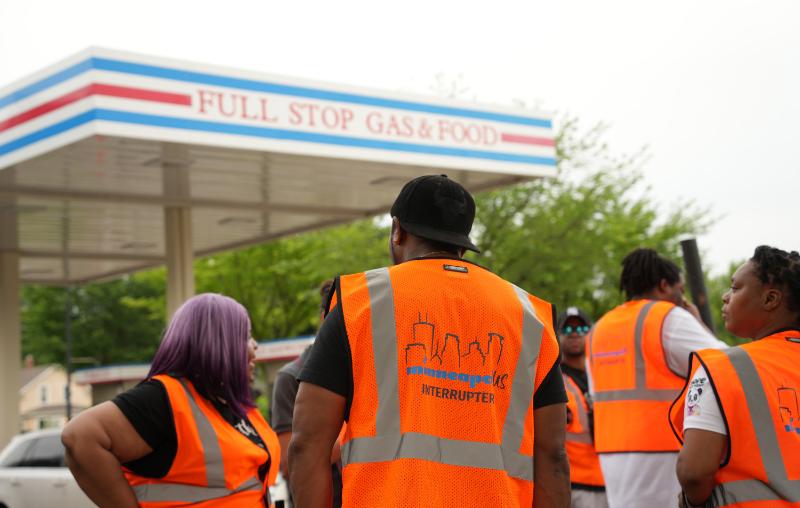
At a gas station once known for shootings and other crime, MinneapolUS team member Arnett Godsey notices a situation unfolding as two men in their 60s draw knives on each other. The blades are sharp. An argument ensues. Tension builds. But Godsey and his team move forward in a calm approach.
“One of us stepped in to talk. Just one, not all of us – Too many at once can make people defensive,” Godsey recalled. “After they calmed down, our next team member came in and continued the conversation. They put the knives down. Then we listened.”
This is what violence interruption looks like in practice: No sirens, no handcuffs. Just presence, patience, and deep trust.
Introducing the Violence Interrupters
Godsey is part of the MinneapolUS Violence Interrupters, a community-rooted team contracted through the City of Minneapolis’ Neighborhood Safety Department (NSD). The NSD is invested in community safety approaches led by community-based organizations that are most affected by violence. The interrupters are employed through trusted local partners, who deeply understand the community not just geographically - but personally.
They are not police officers. They don’t carry badges or weapons. What they do carry is credibility, care, and commitment.
Our program uses the Cure Violence Global model. This approach treats violence as a public health issue, like a disease, that can be stopped before it begins. The idea is to step in at the first sign of trouble, identifying individuals at the highest risk, connecting with them and changing how the community thinks about violence.
That means hiring trusted messengers like Godsey, using data to guide outreach, and applying long-term strategies and solutions for healing and behavior change.
“We don’t come in as outsiders. We are the community,” says Godsey, who openly shares that he was once part of the same cycle of violence he’s now trying to disrupt. “When I see these young people, sometimes I see myself. And I know where it can lead. That’s why I’m out here trying to change things for them.”
Caring for the community
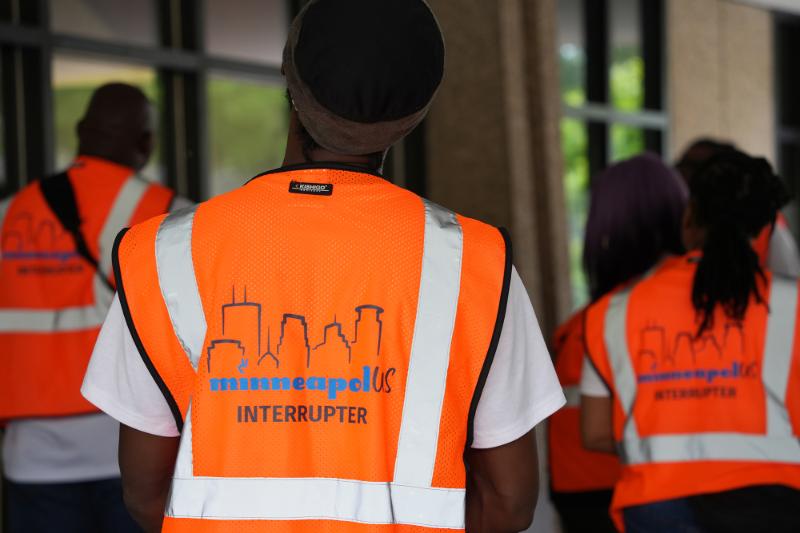
Before hitting the streets, this MinneapolUS Violence Interruption team meets each Tuesday through Saturday at their base. They gather to debrief about what’s happening in the neighborhood: Who’s just been released from jail or prison, been in conflict, and what retaliation might be brewing. They touch base on the positives too: Who is graduating high school, who they have been seeing making positive changes, and what community events are happening in the area.
They don’t only check in about people in the neighborhood – they look out for each other. Each team member rates how they’re feeling on a scale of 1 to 10.
“If someone’s at a 4 that day, we know to look out for them,” says Godsey. “We carry a lot. We see a lot. We’ve got to have each other’s backs.”
Out on the streets
Following the initial check-in, the crew heads out - walking and driving around the area until midnight, patrolling hangout spots like gas stations, libraries, corner stores, and transit hubs. The work is consistent, intentional, and deeply relational.
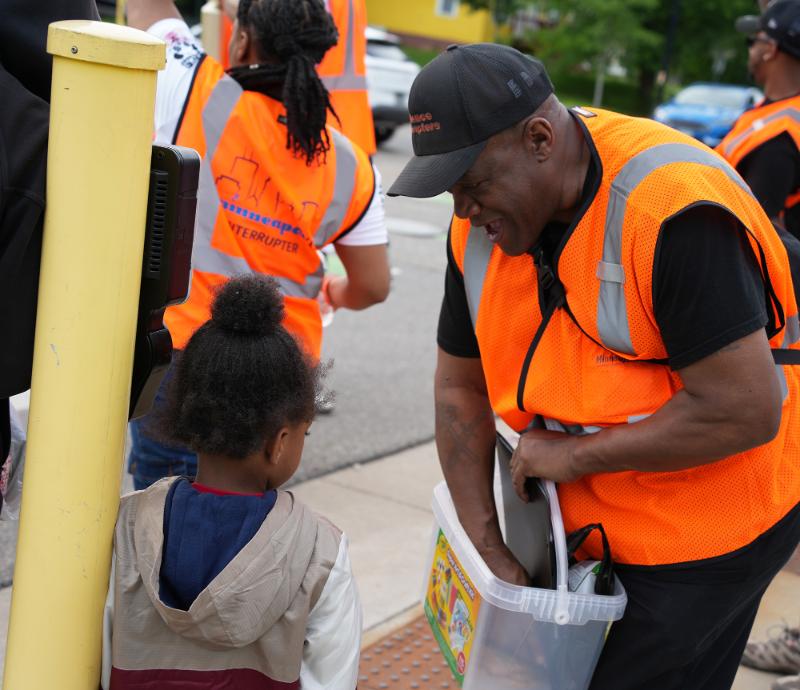
One regular team member is a man known as Coach, who passes out homemade cookies during patrol. “Everyone approaches us to get a cookie,” Coach says. “They know we have them, and they go fast. It’s a great and consistent way for us to connect with people as we walk by. Plus, they are delicious. Who can turn down a homemade cookie?”
Stopping violence before it starts
One of the most powerful examples of the team’s impact came last year outside the Hennepin County Library. Two large groups from the community were escalating toward violence - a potential shootout brewing in broad daylight.
By splitting up the crowd, diffusing the tension, and leaning on personal trust, the team was able to completely de-escalate what could have become a violent event.
Safety in showing up
Staying consistent in outreach means steady victories. Godsey beams when talking about a set of twins and another teenager, kids who used to skip school and hang out at a local very gas station.
“We kept talking to them, checking in with them, encouraging them. This year, they all graduated,” he says. “These check-ins matter.”
Godsey never preaches. He doesn’t shame. A question that is often brought up during his mediation approach is simple: “Are you ready to change?”
Sometimes, people say no. “I tell them, that’s okay. Take your time. But I keep checking on them,” he says. “That long game – of consistent care and relationships – is why this model works.”
A safety strategy that works
By implementing the Cure Violence Global model, Minneapolis is investing in community safety without relying solely on law enforcement.
NSD contracts with several community-based organizations, investing in those who know their neighborhoods best to lead the work. When those investments are paired with a structured, data-informed model like Cure Violence, it results not just in fewer incidents but stronger communities.
“People tell us, ‘You saved my life,’” says Godsey. “And they mean it. I know, because I was one of those lives that needed saving, too. Now I get to be the guy helping others. There is nothing more meaningful than that.”