
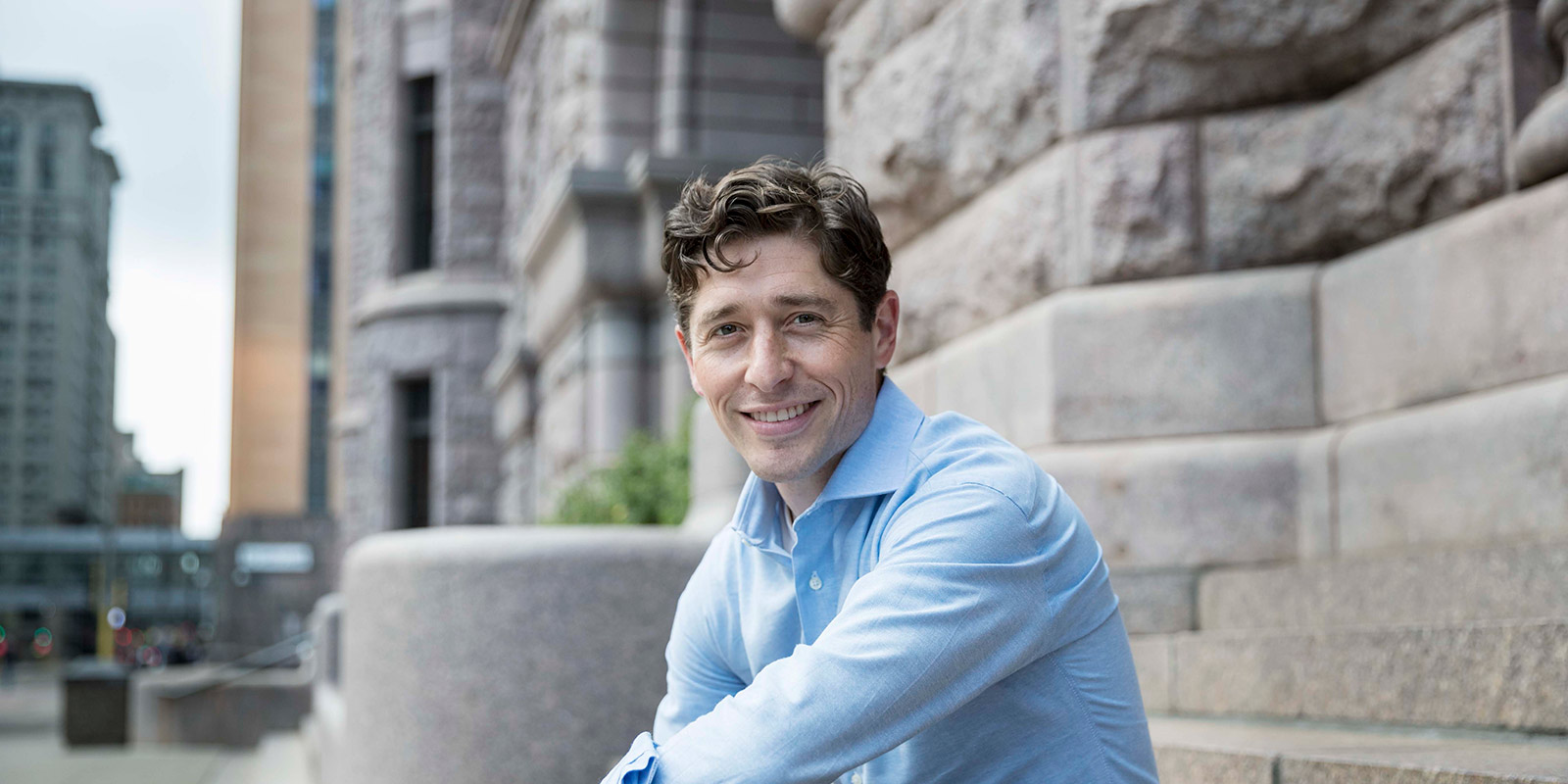
Mayor Rybak Representing Minneapolis at Sustainability Conference in Sweden
Mayor joins representatives of 10 other U.S. cities as part of National League of Cities delegation to first-ever European Green Capital conference in Stockholm
October 19, 2010 (MINNEAPOLIS) Mayor R.T. Rybak arrived in Stockholm, Sweden today to represent Minneapolis at the first-ever European Green Capital conference. Mayor Rybak and officials of 10 other U.S. cities are part of a National League of Cities delegation that will learn how European cities are meeting the challenges of growth, sustainable economic development and enhancing the environment, and will share examples of U.S. cities’ results in meeting the same challenges.
On Thursday, October 21, Mayor Rybak will represent Minneapolis on a panel entitled "Green Success Stories: American Best Practices." Interested parties may follow the conference on Twitter at #EGCConference .
"As we grow Minneapolis, we are growing it sustainably because in the 21 st century, that’s the only way to do it," Mayor Rybak said. "From working to build capacity for jobs and businesses in the clean-energy economy and launching the country’s largest bike-share system, to connecting residents to healthy, locally-grown, sustainable food and helping them save money and energy in their homes, we are building sustainability into everything we do — and getting results."
Earlier this year, an independent survey ranked Minneapolis the sixth-best eco city in the world.
The European Union has officially designated Stockholm as the first European Green Capital, and part of that honor, Stockholm is responsible for holding this inaugural conference on urban sustainability. The National League of Cities (NLC) received a grant from the U.S. State Department to send this delegation of mayors and other top local officials from U.S. cities to the conference. The NLC is fully funding Mayor Rybak’s travel and conference-related expenses.
Guided by Mayor Rybak, the City Council and the City of Minneapolis’ five-year goals, Minneapolis has become one of the most sustainable cities in the United States. The Minneapolis Plan for Sustainable Growth sets the framework for the City’s efforts and guides all our decisions around planning, investment and regulation, and the Minneapolis Sustainability Initiative sets out 25 specific sustainability indicators — from increasing use of renewable energy and building bike capacity, to planting more trees and improving access to healthy, sustainably-produced, locally-grown food — that help benchmark progress.
Recent results include:
Being rated the #1 bicycling city in the U.S. by Bicycling Magazine.
Opening the largest bike-share program in the country in partnership with Nice Ride Minnesota, and nearly doubling the miles of on-street bike lanes.
Through the Homegrown Minneapolis initiative, opening up city-owned land to more community gardens, connecting emerging local food entrepreneurs to business financing and markets, and closing food deserts by establishing more mini-farmers markets.
• Establishing "Energy Savings Made Easy" to provide financing tools for energy-efficiency upgrades, with the goal of making 50% of buildings in the region energy-efficient in the next 10 years.
• Planting over 5,000 trees since 2006 through the City Trees program, whereby the City provides trees at a discount for residents to plant at their homes.
Implementing Access Minneapolis, a comprehensive transportation plan that puts pedestrians, bikes and transit on equal footing with automobiles.
Installing 600KW of solar power on the Minneapolis Convention Center, making it the largest solar array in the Upper Midwest.
Being ranked 10 th for clean drinking water among U.S. cities with populations of 250,000 or more, according to the Environmental Working Group.
• Implementing aggressive storm- and surface-water management programs that help protect the quality of our lakes and the Mississippi River, including by installing green roofs on major public buildings that help capture millions of gallons of storm water each year — and winning the "Innovation in Government Watershed Heroes Award" because of this work.
Other local U.S. officials attending the European Green Capital conference are:
• Bayfield, Wisconsin — Mayor Larry MacDonald
• Boulder, Colorado — Council Member Matt Applebaum
• Burnsville, Minnesota — Mayor Elizabeth Kautz, President of the United States Conference of Mayors
• Cambridge, Massachusetts — Vice Mayor Henrietta Davis
• Lawrence Township, New Jersey — Township Manager Richard Krawczun
• Madison, Wisconsin — Mayor Dave Cieslewicz
• Portland, Oregon — Mayor Sam Adams
• Portsmouth, New Hampshire — Councilor Eric Spear
• Riverside, California — Mayor Ron Loveridge
• Tallahassee, Florida — Mayor John Marks
Published Oct. 19, 2010